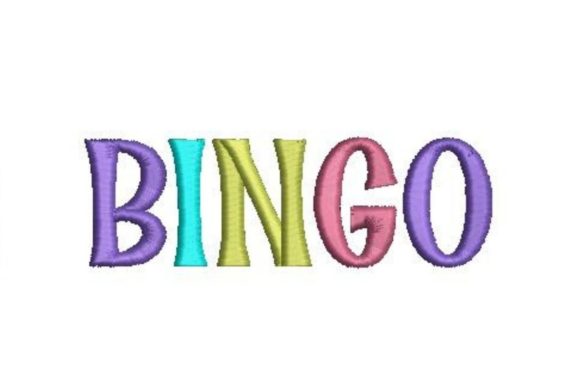
BINGO Embroidery Design Review for Small Business Merch
As an experienced embroidery designer who has spent years refining designs for everything from corporate uniforms to boutique product labels, I know that the difference between a good design and a profitable one often comes down to context. When I first encountered the BINGO machine embroidery design, my initial reaction was one of curiosity regarding its potential for commercial application. The description paints it as colorful, playful, and creative, inviting the viewer to engage in a game. While this sounds perfect for a casual craft project, we need to dig deeper to understand how this design performs when applied to serious small business merchandise.
This review is not just about aesthetics; it is about viability. For shop owners, Etsy sellers, apparel decorators, and handmade brands, every stitch represents an investment. We are looking at whether BINGO can serve as a functional brand asset or if it remains a decorative novelty. Let us evaluate how this design fits into the real-world scenarios of branded patches, staff uniforms, and custom apparel.
First Impressions: Playful Personality Meets Brand Potential
The moment you visualize the BINGO design, the word "playful" jumps out. In the world of branding, personality is currency. A design that feels professional, friendly, bold, and modern can instantly elevate a product line. This design does not feel stiff or overly corporate; instead, it suggests a creative studio, a lively bakery, or a fun pet brand. The colorful nature of the embroidery invites engagement, which is exactly what you want when trying to capture the attention of a customer browsing an online store or walking through a boutique.
However, there is a delicate balance between "fun" and "unprofessional." If your brand identity relies on high-end luxury or strict minimalism, BINGO might clash with your visual consistency. But for businesses aiming to project approachability, creativity, and a handmade touch, this design offers a vibrant accent that can turn a standard tote bag or apron into a memorable marketing tool. It transforms a simple garment into a conversation starter.
Real-World Applications for Small Business Merch
So, where does BINGO truly shine? Let us imagine a local café or a handmade soap shop wanting to create a cohesive look for their team and products. This design is versatile enough to be adapted for various uses, provided the execution is sound.
Branded Patches and Accents
One of the most effective ways to use this design is as an embroidered patch. Imagine a leather patch sewn onto the back of a denim jacket worn by a barista, or a fabric patch attached to the chest of a work shirt. The playful lettering of BINGO works exceptionally well here because patches allow for distinct borders and backing that stabilize the design. It adds a layer of depth that flat printing cannot achieve, increasing the perceived value of the finished product.
Aprons and Staff Uniforms
For bakeries, florists, or craft studios, the apron is a canvas. Placing BINGO on the bib of an apron creates a focal point that humanizes the staff. It signals that this is a place where fun and quality coexist. Similarly, for cap embroidery, this design could serve as a unique logo alternative. Instead of a traditional circular emblem, a curved BINGO text on the front panel of a trucker hat could become a signature look for a summer event or a seasonal promotion.
Tote Bags and Product Packaging
Tote bags are arguably the best vehicle for this design. A sturdy canvas tote featuring the colorful BINGO motif acts as a walking billboard. Customers carry these bags to the grocery store or the beach, spreading brand awareness organically. Furthermore, using this design as a label on product packaging—such as a box of candles or a jar of jam—adds a tactile element that enhances the unboxing experience. It turns a generic item into a handmade product with character.
Strategic Considerations and Limitations
While the potential is high, a professional designer must always exercise caution. There are specific scenarios where BINGO might struggle, and understanding these limitations is crucial for avoiding costly production errors.
Size and Detail Constraints
If you intend to make this design into a tiny patch or a small chest logo, you must be careful. The description mentions "multiple embroid" options, but without knowing the exact stitch count, we must assume there is a level of detail involved. On very small surfaces, intricate details can blur together. If the lettering becomes too small, the playful curves may lose definition, making the design look muddy rather than crisp. Always test the design at the intended final size before committing to a full production run.
Fabric and Surface Challenges
Embroidering on curved surfaces like caps requires precision. If the hoop size is not appropriate for the curve of the cap, the tension will be uneven, leading to puckering. Additionally, textured fabrics can hide the fine lines of the design. Dark uniforms present another challenge; if the thread colors are not chosen with high contrast in mind, the colorful elements of BINGO may get lost against a black or navy background. You must ensure the thread colors pop to maintain the design's energetic vibe.
Maintenance and Durability
Items that undergo frequent washing, such as staff aprons or work shirts, require robust stitching. High stitch density is necessary for durability, but too much density can cause the fabric to warp. If the design is used on items that will be washed constantly, verify that the stabilizer choice is adequate to support the weight of the stitches over time.
Impact on Brand Identity and Customer Trust
Choosing the right embroidery file goes beyond just filling a void on a garment; it is about reinforcing your brand identity. A well-executed BINGO design communicates confidence. It tells the customer that you care about the details of your product. When a customer sees a clean, well-aligned embroidery job on a tote bag or a uniform, it builds trust. It suggests that your business is professional and reliable.
Conversely, a poorly executed design can damage customer trust. If the stitch density is off or the colors bleed, the perception of quality drops immediately. By treating BINGO as a core part of your commercial embroidery strategy, you ensure that every branded item contributes positively to your reputation. It elevates the finished product, making it something customers actually want to keep and wear.
Essential Designer Notes for Production
Before you hit the "start" button on your embroidery machine, there are several practical steps every digital embroidery file buyer should take to ensure success.
- Test in Black and White: Before adding color, check the design in monochrome. This helps you see if the spacing and layout hold up without relying on thread color contrast.
- Verify Stitch Density: Ensure the design is optimized for the fabric you are using. Too many stitches on lightweight fabric will cause puckering.
- Check Hoop Size: Confirm that your machine's hoop can accommodate the dimensions of the BINGO design, especially if you are working with large patches or wide areas on aprons.
- Use Proper Stabilizer: Never skip this step. The correct stabilizer is the backbone of a clean embroidery job, preventing distortion on stretchy or heavy materials.
- Create a Printable Mockup: Before producing physical samples, create a printable mockup for client approval. This allows you to visualize the design on different products without wasting thread.
- Review Commercial Licensing: Most importantly, confirm your commercial licensing terms. Ensure you have the legal right to use this design asset for selling merchandise.
In conclusion, the BINGO embroidery design offers a fantastic opportunity for small businesses looking to inject personality into their custom apparel and product labels. Whether you are creating branded patches for a team or a unique mark for a tote bag design, this design can be a powerful tool. However, success depends on rigorous testing, proper technical setup, and a clear understanding of how the design aligns with your overall brand identity. Treat it with the respect of a professional asset, and it will pay dividends in customer engagement and product value.